
How often should I service my AC in Neptune Beach?
Twice a year. Oceanfront salt exposure corrodes coils and connections faster than inland, so spring and fall maintenance visits catch damage early and protect your warranty.
Right-sized comfort for a small salt-air beach town
Neptune Beach is the compact middle of the Jacksonville Beaches—a built-out grid of small, older cottages tucked between Atlantic Beach and Jacksonville Beach, a few hundred yards from the Atlantic. Salt air, relentless humidity, and modest floor plans mean the equipment that fits an inland home rarely fits a beach cottage here.
Flowstate Pros sizes and protects comfort systems for exactly these conditions—coastal-rated cooling that will not rust out early, right-sized air conditioning and mini-splits for tight cottage layouts, and plumbing built to handle the city's mineral-rich well water.
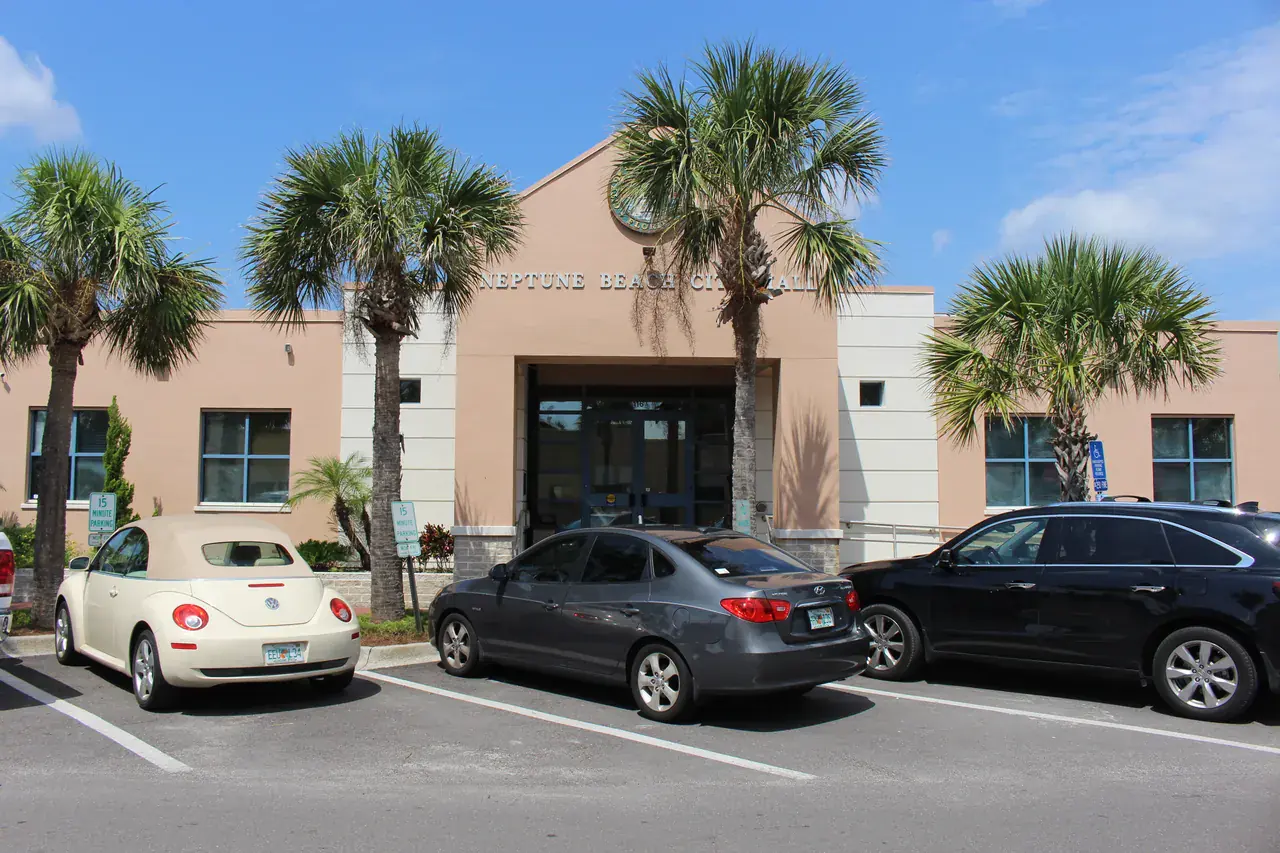
Neptune Beach is a small barrier-island city where oceanfront salt aerosol, near-constant humidity, and a largely built-out stock of mid-century cottages define the local conditions. The city runs its own municipal water utility, drawing mineral-rich groundwater from the Floridan aquifer through its own wells, so hard water and sulfur odor are as much a factor as the salt air outside.
Just off the Atlantic, hygroscopic salt particles hold moisture against aluminum fins and copper tubing, corroding outdoor condensers, heat pumps, and exposed plumbing far faster than inland.
Persistent humidity strains cooling capacity, feeds mold and musty odors in small tight cottages, and keeps indoor moisture control front-of-mind year-round.
The city is compact and mostly built out, so many homes are modest mid-century cottages with tight footprints and retrofitted ductwork—system sizing and zoning matter more than raw tonnage.
Neptune Beach operates its own wells into the Floridan aquifer and treats the water by aeration and chlorination, but it stays hard and can carry a sulfur note that scales heaters and taxes fixtures.
This close to the ocean, a standard condenser corrodes years early, and salt-air damage is frequently excluded from manufacturer warranties. We specify coastal-rated systems with e-coated coils, sealed cabinets, and corrosion-resistant hardware, site the outdoor unit on the leeward side of the cottage, and add protective coatings and freshwater rinses so equipment reaches its full service life. Twice-a-year maintenance—not annual—catches fin pitting and rusted fasteners before a peak-summer breakdown.
Neptune Beach cottages have tight floor plans, and an oversized AC is the wrong answer here—it short-cycles, never runs long enough to wring humidity out of the air, and leaves rooms clammy. We do a proper load calculation and right-size the system to the home, and for additions, sunrooms, and older wings with no good ductwork we install ductless mini-splits that cool the space efficiently without tearing the cottage apart.
Nearly every Neptune Beach home heats with an electric heat pump, whose outdoor unit faces the same corrosive salt exposure as the AC. We tune heat pumps for the mild-but-humid winters, protect the coil and reversing valve from corrosion, and recommend coastal-rated replacements when an aging unit is no longer worth repairing rather than pouring money into rust.
Coastal humidity is relentless, and in a small, tight cottage a cooling system alone often cannot pull enough moisture out of the air. Whole-home dehumidifiers and high-grade media air cleaners hold relative humidity in the healthy 45-55% range, stop the mold and musty odors that thrive in older beach houses, and reduce the corrosive moisture load on the equipment itself.
Neptune Beach pumps its own mineral-rich groundwater from the Floridan aquifer, so scale builds inside water heaters and on fixtures while coastal humidity corrodes exposed supply lines and valves—and the water can carry a sulfur odor. We service and install water heaters (checking the sacrificial anode rod that hard water eats first), replace corroded faucets and fixtures with hardware that stands up to the salt air, and add whole-home filtration where testing calls for it to cut scale and odor.
Twice a year. Oceanfront salt exposure corrodes coils and connections faster than inland, so spring and fall maintenance visits catch damage early and protect your warranty.
Often yes. Oversized units short-cycle and leave small cottages humid. We run a load calculation to right-size the system, and use ductless mini-splits for additions or wings where running ductwork is impractical.
Airborne salt holds moisture against the aluminum fins and copper tubing of your condenser or heat pump, driving corrosion. Freshwater rinses, protective coatings, and leeward placement all slow it down, and coastal-rated equipment lasts longest.
Yes. The city draws mineral-rich groundwater from the Floridan aquifer, so scale on fixtures and inside water heaters is common, sometimes with a sulfur note. A quick water test tells us whether filtration makes sense for your home.